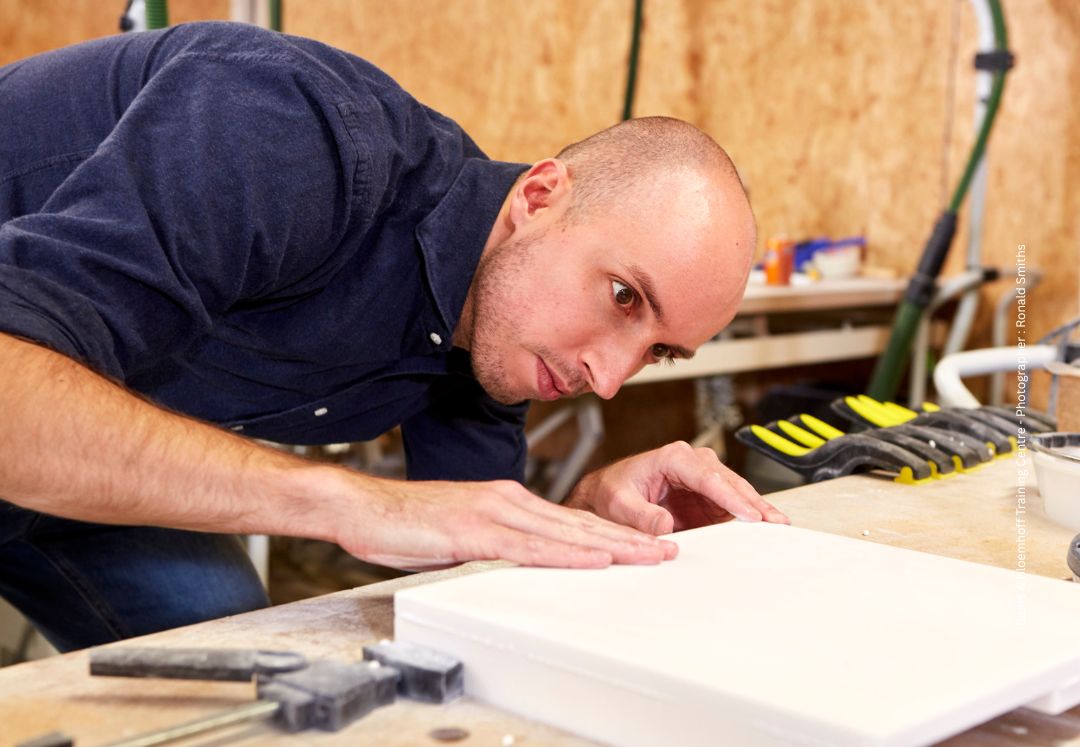
Substructure and Support Requirements for HIMACS Sheets
HIMACS sheets, as well as most solid surface materials, must be adequately supported to prevent cracking or deformation. Although HIMACS exhibits commendable hardness, extensive widths and long spans without appropriate support may result in downward bending.
Furthermore, the seam line alone cannot guarantee long-term durability for the end user if sufficient structural support is not provided.
This section outlines the minimum recommended practices for establishing a stable substructure and ensuring proper installation.
1. Substructure
Recommended Support Materials and Substructure Requirements
Depending on the specific application, the following support materials are recommended:
Metal Profiles:
Steel or stainless-steel profiles – suitable for high-load areas and environments requiring corrosion resistance.
Aluminium profiles – lightweight and resistant to moisture, ideal for general structural support.
Wood-Based Panels:
Moisture-resistant MDF (Medium-Density Fibreboard) – commonly used in interior applications where moderate strength and moisture resistance are required.
Moisture-resistant plywood – offers good structural integrity and is suitable for areas exposed to humidity.
Moisture-resistant particle board – cost-effective and suitable for low to moderate load-bearing applications.
Construction Boards:
Plasterboard – appropriate for dry environments and vertical applications.
Cement board or fibre cement board – recommended for wet areas due to their superior moisture resistance and durability.
It is imperative to ensure that the substructure is designed to meet the mechanical and environmental demands of the intended use. For kitchen installations—such as countertops—a robust substructure frame is strongly advised to ensure long-term stability and performance.
.png)
Reinforcement Methods for HIMACS Installations
To ensure structural integrity and long-term performance of HIMACS surfaces, especially in applications subject to permanent or substantial loads, the following reinforcement techniques are recommended:
Integrated Substructure Reinforcement
Incorporate rigid support elements directly beneath the HIMACS sheet. These may include:
Aluminum or steel profiles: Positioned longitudinally and/or transversely to distribute weight evenly.
Plywood or MDF panels: Bonded to the underside to provide a continuous support base.
Cross-Bracing
Install cross-bracing within the substructure to prevent lateral movement and maintain flatness. This is particularly important for wide spans or unsupported sections.Load Distribution Plates
Use load distribution plates or panels beneath areas subject to concentrated loads (e.g., under heavy appliances or sinks). These help spread the weight across a larger surface area.Mechanical Fixings
In addition to adhesive bonding, mechanical fixings such as screws or brackets may be used to secure reinforcement components to the base structure, ensuring stability under dynamic or long-term stress.Foam-Based Double-Sided Tape
Where applicable, foam-based double-sided tape can be used between reinforcement elements and the HIMACS sheet to maintain flatness and absorb minor movements or vibrations.
.png)
Substructure Construction Guidelines
Substructure strips fabricated from wood or particle board should have a minimum width of approximately 80 mm and a material thickness of approximately 26 mm, or as determined by the static load calculations relevant to the material employed.
Rebates for reinforcement strips must be incorporated during the material preparation phase of the substructure construction. These should be clearly specified, particularly when specialised components are to be outsourced to metalworking facilities.
The substructure design will vary depending on the specific material and project requirements.
Rebate Preparation Process for Reinforcement Strips
Rebate preparation is a critical step in ensuring that reinforcement strips are properly integrated into the substructure of a solid surface installation. A rebate is a recessed groove or channel cut into the material to accommodate a secondary component—typically a reinforcement strip—allowing it to sit flush with the surrounding surface.
Planning and Design
Determine the location and dimensions of the reinforcement strips based on the structural requirements of the installation.
Ensure that the rebate dimensions correspond precisely to the width and thickness of the reinforcement material to achieve a secure and flush fit.
Material Preparation
Mark the rebate positions on the substructure material (e.g., wood, particle board, or MDF).
Use appropriate tools such as a router, circular saw, or spindle moulder to cut the rebate to the required depth and width.
Integration of Reinforcement Strips
Insert the reinforcement strips into the prepared rebates.
Secure them using suitable adhesives or mechanical fixings, depending on the material and load-bearing requirements.
Outsourcing Considerations
For projects requiring metal reinforcement (e.g., aluminum or steel), rebate specifications must be clearly communicated to external metalworking providers.
Ensure that tolerances and finish quality meet the standards required for seamless integration with the HIMACS sheet.
Quality Control
Inspect the rebate and reinforcement assembly for alignment, fit, and structural integrity.
Confirm that the reinforcement does not interfere with the flatness or bonding of the HIMACS surface.
It is the responsibility of the fabricator to select an appropriate construction method tailored to the individual project, considering the performance characteristics of HIMACS material and the specific demands of the application. For guidance on particular use cases, project management support is available from LX Hausys Europe GmbH.
2. Overhang Solutions Suitable for 12 mm Sheet
When designing countertops with overhangs that extend beyond the base cabinetry, the following recommendations apply specifically to installations using 12 mm HIMACS sheets:
Overhangs up to 50 mm
No additional structural support is required.
Overhangs between 50 mm and 150 mm
If the overhang is subject tono load, additional support is not necessary.However, if the overhang is expected to bearany load, a second layer of HIMACS sheet must be installed beneath the countertop. This additional layer must extend continuously under the overhang and be securely anchored to the base cabinet(s) to ensure structural integrity.
Overhangs up to 300 mm
Support Requirements: Corbels must be installed at intervals of no more than 600 mm for overhangs exceeding 150 mm in width, or where unusual loading conditions are anticipated.
Edge Treatment: A properly fabricated edge detail enhances the structural integrity of the overhang and conceals the supporting components. One of the most straightforward methods for creating a drop edge is to stack additional layers of HIMACS beneath the primary sheet. This technique is suitable for the Solid and Granite colour families.
Typical Configurations:
Two layers (24 mm total thickness)
Three layers (36 mm total thickness)
Overhangs up to 600 mm
Support Requirements: Supporting legs or columns must be positioned at intervals of no more than 600 mm for overhangs exceeding 300 mm in width, or where unusual loading conditions are anticipated.
Edge Treatment: As with shorter overhangs, a reinforced edge detail is essential. The stacking method described above remains applicable and effective for this range.
Overhang Dimensions | Additional Structure | Limitation |
|---|---|---|
50 mm | Not required | X |
50 mm to 150 mm | Not required | No Additional Weight |
50 mm to 150 mm | Additional layer of HIMACS | With Additional Weight |
150 mm to 300 mm | Corbels every 600 mm | X |
300 mm to 600 mm | Supporting leg or support column every 600 mm | X |
Overhang Support Ratio Guideline
A maximum of one-third of the total width may extend unsupported beyond the base structure.
The remaining two-thirds of the width must be fully supported.
If this ratio cannot be maintained, corbel brackets must be installed beneath the overhang to provide adequate structural support.
Bracket Installation and Overhang Support Instructions
When installing support brackets for overhangs, the following procedures must be observed to ensure structural integrity and material protection:
Do not affix brackets directly to the HIMACS material.
Instead, incorporate a piece of hardwood within the perimeter or lattice support structure. Fasteners or screws should be used only if they do not exceed the thickness of the hardwood component.
For metal supports, apply silicone at all junction points to prevent direct contact and allow for flexible bonding.
Alternative Support Method: A full substrate beneath the overhang, combined with a web support structure positioned above the base cabinets, is also considered an acceptable method of reinforcement.
Choose the installation method and fittings that are most appropriate for the specific requirements of your project. The selected approach must ensure compliance with all relevant performance and structural criteria.
.png)
Overhang solutions
for 12 mm sheet
Criteria for Selecting Installation Method and Fittings
Project-Specific Load Requirements
Assess whether the surface will be subject to static or dynamic loads (e.g., heavy appliances, frequent use).
Choose reinforcement methods (e.g., corbels, brackets, substrate layering) based on anticipated weight distribution.
Overhang Dimensions
Determine the extent of any overhangs and apply the appropriate support strategy:
Up to 50 mm: No support required.
50–150 mm: Support required only under load.
150–600 mm: Corbels or columns required at 600 mm intervals.
Material Compatibility
Ensure that adhesives, fasteners, and support structures are compatible with HIMACS material properties.
Use silicone at junctions with metal components to prevent stress and allow for thermal expansion.
Substructure Composition
Select suitable substructure materials (e.g., hardwood, MDF, metal) based on environmental conditions and mechanical performance.
Incorporate rebates or lattice supports where necessary.
Aesthetic Considerations
Choose edge treatments and support methods that maintain visual consistency and conceal structural elements.
Drop edges created by stacking HIMACS layers are recommended for Solid and Granite colour families.
Installation Environment
Consider humidity, temperature fluctuations, and exposure to water or chemicals when selecting materials and methods.
Compliance and Manufacturer Recommendations
Follow HIMACS installation guidelines and consult LX Hausys technical support for project-specific advice.
Ensure all methods meet local building codes and safety standards.
3. Overhang Solutions Suitable for 20 mm Sheet
When designing countertops with overhangs extending beyond the base cabinetry, the following recommendations apply specifically to installations using 20 mm HIMACS sheets:
Overhangs up to 150 mm
No additional structural support is required.
Overhangs between 150 mm and 300 mm
If the overhang is subject to no load, additional support is not necessary.
If the overhang is expected to bear any load, corbels must be installed at intervals of no more than 600 mm for widths exceeding 150 mm, or where unusual loading conditions are anticipated.
For overhangs extending up to600 mm, the following support measures must be applied based on anticipated usage:
Zero Load Conditions: A corbel must be installed to provide adequate support.
Normal Daily Use: A ladder-type substructure must be positioned beneath the overhanging section, with supporting legs spaced at intervals not exceeding 600 mm.
Extended Spans: If the distance between substructure supports exceeds 600 mm on either side, additional solid substructures must be incorporated to maintain structural integrity.
Edge Treatment Considerations
A properly fabricated edge detail enhances the strength of the overhang and conceals the supporting components.However, the stacking method is not recommended for 20 mm HIMACS sheets due to potential thickness variation, which may result in visible gaps when layers are stacked.
Overhang Dimensions | Additional Structure | Limitation |
|---|---|---|
0 mm to 150 mm | Not required | X |
150 mm to 300 mm | Not required | Without Additional weights |
150 mm to 300 mm | Corbels every 600 mm | With Additional weights |
300 mm to 600 mm | Corbels every 600 mm | Without Additional weights |
300 mm to 600 mm | Supporting leg or column every 600 mm | With Additional weights |
Overhang Support Ratio Guideline
To prevent structural failure in overhang applications, it is essential to adhere to the following support ratio:
A maximum of one-third of the total width may extend unsupported beyond the base structure.
The remaining two-thirds of the width must be fully supported.
In instances where this ratio cannot be maintained, corbel brackets must be installed beneath the overhang to provide adequate structural support.
Bracket Installation and Overhang Support Instructions
When installing support brackets for overhangs, the following procedures must be observed to ensure structural integrity and material protection:
Do not affix brackets directly to the HIMACS material.
Instead, incorporate a piece of hardwood within the perimeter or lattice support structure. Fasteners or screws should be used only if they do not exceed the thickness of the hardwood component.
For metal supports, apply silicone at all junction points to prevent direct contact and allow for flexible bonding.
Alternative Support Method: A full substrate beneath the overhang, combined with a web support structure positioned above the base cabinets, is also considered an acceptable method of reinforcement.
Choose the installation method and fittings that are most appropriate for the specific requirements of your project. The selected approach must ensure compliance with all relevant performance and structural criteria.
.png)
Overhang solutions
for 20 mm sheet
This guideline has been created to provide technical information for successful fabrication and installation of HIMACS, and it is intended to be used in a safe environment considering their own discretion and risk by who has technical skill for fabrication and installation of HIMACS.
This guideline is continually revised to provide reliable and up-to-date information, replacing all previous versions of the guideline and technical information, however the usage and conditions of use are beyond LX Hausys control, LX Hausys cannot guarantee the suitability of material, fabrication and installation for all usage and conditions of use. Users should not regard or rely on this guideline as a complete, sole, up-to-date or absolute information. HIMACS users, fabricator and installer should review whether the design for HIMACS, fabrication method, installation method and required performance are suitable for the intended use and conditions of use. LX Hausys shall not be liable for any direct or indirect, commercial damages or losses caused by the fabrication and installation results of HIMACS using any or all these guidelines. In addition, the results of joining with other materials, and the fabrication and installation guidelines for other materials shall not be covered by LX Hausys.
This guideline does not encourage to violate any laws, patents and licenses, and cannot be used as a basis for legal liability. All works on / from HIMACS must be performed in accordance with related laws and regulations.
LX Hausys reserves the right to change the technical information and disclaimers in this guideline for technical development and further information, and the use of HIMACS or this guideline is considered to accommodate the information and changes provided in this guideline. Therefore, please check the changed details of this guideline from time to time.
LX Hausys reserves all information in this material, and no reproduction or alteration is permitted in any way for all or any part of the information without the official written permission of LX Hausys.